
A playground is one of those CSR projects people can see, touch and judge for themselves. Children use it every day, the benefits are easy to explain and the results don’t need a long report. If you’re a company CSR team or an NGO planning playground equipment for CSR projects and NGOs in India, the equipment is the easy part. The planning, paperwork and long-term upkeep decide whether the project really helps.
Why Playgrounds Work as CSR Projects
- Direct, visible impact. Children, teachers and parents see the difference at once.
- Fits education and community work. Many projects happen in schools, anganwadis, shelter homes and community centres.
- Long-lasting if done right. Good equipment serves many batches of children.
- Easy to document. Photos, user numbers and before-and-after records are simple to collect.
- Encourages regular attendance and wellbeing in places where play space is limited.
Understand the CSR Rules Before You Plan
CSR spending in India has a legal framework, and projects need to fit it.
Section 135 of the Companies Act sets out which companies must spend and how much, while Schedule VII sets out what they may spend it on. Entities that implement CSR projects on a company’s behalf, such as trusts, registered societies and Section 8 companies, must obtain a CSR Registration Number by filing Form CSR-1 with the Ministry of Corporate Affairs. A company’s spending counts towards its obligation only if the implementing agency holds a valid CSR-1 registration and the project fits a named head under Schedule VII. CSR Funding for NGOs 2026: How to Get Listed on Schedule VII +2
In practice:
- Companies should check that an NGO partner has a valid registration number and that the project maps to an eligible category, such as education-related work at a school.
- NGOs should confirm their registration is current and that their proposal describes the project in terms that match an eligible category.
- Both should confirm current rules with the company’s CSR committee or a qualified adviser, since rules and amendments change.
Whether a specific playground project qualifies depends on how it’s framed and where it’s located. Don’t assume. Ask.
Where Playground CSR Projects Are Most Useful
- Government and aided schools with little or no play equipment
- Anganwadis and preschools that need safe, age-appropriate play
- Shelter homes, orphanages and care centres
- Community parks in low-income neighbourhoods
- Special-needs schools and rehabilitation centres
- Rural schools and village common spaces
Pick locations where children have the least access to safe play.
Planning a Project That Lasts
Start with a needs assessment. Visit the site, talk to teachers or caretakers and count the children, their ages and available space.
Choose equipment that suits the setting. Simple, sturdy structures often serve better than elaborate ones that need constant care.
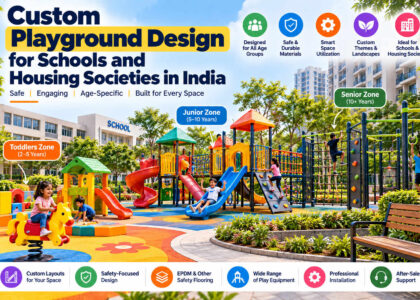
Match equipment to age groups. Low climbers and small slides for younger children, taller structures for older ones.
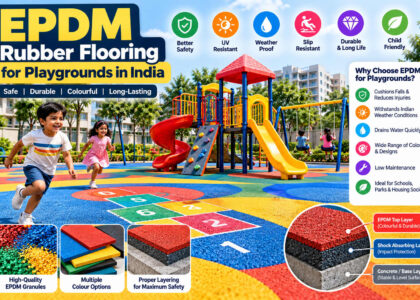
Plan the surface. Rubber tiles, sand or other soft surfacing under every structure. Hard ground undoes much of the safety.
Think about shade and drainage. A burning-hot slide or a puddled ground makes the area unusable.
Fix responsibility early. Decide who checks and maintains the equipment after handover.
What to Look for in Equipment
- Durable materials such as galvanised steel, UV-stable plastic and treated timber
- Rounded edges, covered bolts and no pinch points
- Firm anchoring with proper concrete footings
- Low-maintenance design, especially for remote locations
- Easy-to-replace parts that don’t need specialised tools
- Clear age labels
A cheap set that breaks in a year defeats the purpose of the project.
Make the Handover Count
A good handover prevents problems later.
- Share a simple care guide with the school or NGO
- Train a local caretaker to do weekly checks
- Provide warranty details and supplier contacts
- Keep spare part options within reach
- Put up a sign with usage rules and age guidance
- Record photos and installation details for reporting
Many CSR playgrounds fall into disrepair because nobody was clearly in charge afterwards.
Reporting and Documentation
Keep records from the start.
- Photos of the site before, during and after
- Number of children benefiting
- A list of equipment installed, with dates
- Invoices, delivery proofs and warranty papers
- Basic usage notes or feedback from teachers and children
Clear documentation helps you report to the company, answer audits and show the impact of your work.
Questions for a Supplier
- Have you completed school or NGO playground projects before?
- Can you provide the documents needed for reporting?
- What materials and coatings do you use?
- What warranty and spare parts support do you offer?
- Do you handle installation and site preparation?
- Can you work within a fixed budget and phase the project?
- Can I visit a similar project that has been in use for a few years?
Budgeting Wisely
Don’t spread the budget too thin. A smaller playground with good surfacing and sturdy equipment will outlast a larger one built cheaply. If funds are limited, build the first phase carefully and add more later.
Choosing a Supplier
Go Green Play Equipment offers outdoor playground products, and sharing your site details, number of children and budget at the start helps shape a plan. If your project also includes an outdoor fitness area for older children or the community, Telangana Corporate Services can help with that side.
Final Thought
A CSR playground succeeds when children keep using it long after the opening photo. Choose the right location, follow the rules, pick durable equipment and plan upkeep from day one. That’s how a one-time project becomes a lasting part of a community.