Most playground budgets run into the same problem: everyone wants a slide, a swing, a climber and a tunnel, but there’s only so much ground and only so much money. A multi activity play station is the usual answer. It packs several activities into one connected structure, so many children can play at once without needing a separate piece of equipment for each. If you’re looking at multi activity play stations for parks and schools in India, here’s how to decide whether one suits your site and how to judge what you’re being offered.
What You’re Actually Buying
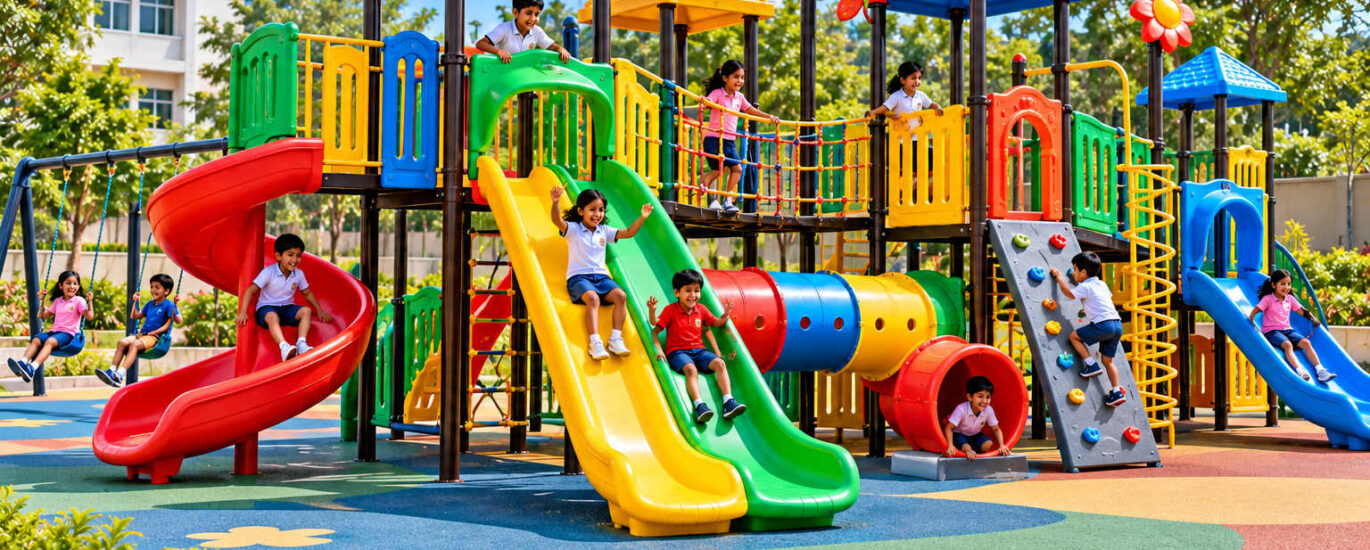
A multi activity play station is a single modular unit with platforms at different heights, linked by bridges, ladders, ramps and tunnels. Slides come off the sides. There may be steering wheels, panels with games, climbing walls, rope nets or a small roof over the top deck. Some units also include swings attached to the frame.
The big advantage is that children move from one activity to the next without leaving the structure. It also keeps the footprint tidy, because everything sits on one set of footings.
When a Combined Unit Makes Sense
It tends to work well when you have limited space but a large number of children. A school playground at break time is a good example. Forty children running at the same time can’t all queue for one slide. A combined unit gives them several routes, so the crowd spreads out.
In a public park, it also works as a clear focal point. Parents know where the children will be, and the area is easy to supervise because everything is in one place.
It may not be the best choice if you have lots of free space and want a mix of very different activities spread out, or if you only need something for toddlers. In that case, separate small pieces can feel more natural.
Pick the Right Size for the Age Group
Multi activity stations come in different scales. A junior unit has lower platforms, shorter slides and small steps, and suits younger children. A senior unit has taller towers and more demanding climbing routes for older kids.
A common mistake is buying one tall tower to serve every age. Small children can’t use it properly, and older children get bored of the low parts. If your school or park has both age groups, think about two linked zones, or at least a design with clearly separate sections.
What It’s Made Of
Most units combine a steel frame with panels, slides and roofs made of FRP or moulded plastic. Some use treated timber for decks and posts.
The frame is the part that carries the load. Look at the thickness of the pipe, how the welds are finished and whether the steel is galvanised or well coated. Check the bolts. A strong frame with weak bolts will loosen within a season.
For plastic and FRP parts, ask whether they’re UV-stable. Cheap plastic fades and goes brittle in the Indian sun, and a cracked panel at height is not something to ignore.
Safety Is in the Details
A structure with many levels and connections has more places where things can go wrong. A few things matter most. Guard rails and barriers on every raised platform. No gaps where a child’s head or hand could get stuck, especially between panels and around bridges. Rounded edges and covered bolts. Stable, well-anchored footings. Enough clear space on all sides for falls and for children running past.
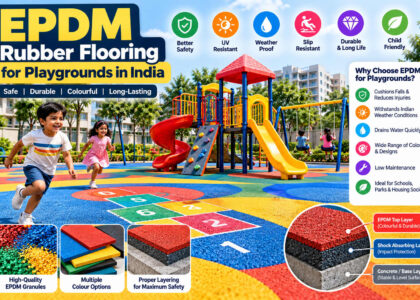
The ground under it matters just as much. Rubber tiles or thick sand over a prepared base is a sensible choice. Concrete or bare tiles under a tall unit invites injury.
Ask the manufacturer what number of children the unit is designed for and don’t exceed it. A structure that’s meant for fifteen isn’t meant for thirty.
Layout and Shade
Place it where staff or parents can see all sides. Keep it away from walls, gates and walkways. Think about the sun, because a steel slide facing west gets very hot by the afternoon. A shade sail or a tree nearby makes the area usable for more hours of the day.
Leave room around the exits of the slides and the base of the ladders. Those are the spots where children bunch up.
Questions to Ask a Manufacturer
Ask how many children the unit is designed for and what age range it suits. Ask what material the frame and panels are made from, and how thick. Ask whether it can be customised, with different slides, add-ons or colours. Ask how it’s installed and who does it. Ask what the warranty covers and how quickly spare parts can be supplied. Ask to see an installation that has been outdoors for a few years. Someone who builds these regularly will answer easily.
Cost and Value
A combined unit costs more than a single slide, but it can cost less than buying every piece separately, and it uses space better. Don’t judge only by price. A cheaper unit with thin pipe and weak plastic can end up costing more over time. Compare what’s included: installation, surfacing, delivery and warranty.
Looking After It
Check the bolts and joints monthly. Look over plastic panels for cracks and fading. Test the platforms for any wobble. Inspect guard rails and ladders, and clear leaves and rubbish from the base. After heavy rain, look at the footings. If something is damaged, close that part off until it’s repaired.
Planning the Whole Area
A play station is usually the centrepiece, but it works best with some planning around it. Seating for adults, shade and a clear boundary make a real difference. For other outdoor playground products to go alongside it, Go Green Play Equipment can help. If your project also includes a fitness area or outdoor furniture, Telangana Corporate Services can help with those too.
A well-chosen play station gives children somewhere to go and a lot to do, without taking up the whole ground. Pick the right scale, check the build, plan the surface and keep it maintained, and it will stay busy for years.