Most playground injuries are not caused by the slide or the swing. They happen when a child lands on a hard surface. Concrete, tiles and packed soil look fine until someone falls from a climber. That is the reason EPDM rubber flooring for playgrounds India has moved from a premium extra to something schools, housing societies and parks now ask for by name. This guide explains what the material is, what to check before you order, and the mistakes that cost people money later.
What EPDM Flooring Is
EPDM stands for ethylene propylene diene monomer, a synthetic rubber that handles sun, rain and temperature swings well. In playgrounds, coloured EPDM granules are mixed with a polyurethane binder and laid on a prepared base. The result is a soft, springy and slip-resistant surface. It comes in two common forms. Poured-in-place flooring is mixed on site and laid as one seamless layer, which suits irregular shapes and curves around equipment. Pre-made tiles or mats are cut in a factory and laid on site, which is quicker and easier to repair in sections.
Why It Suits Indian Conditions
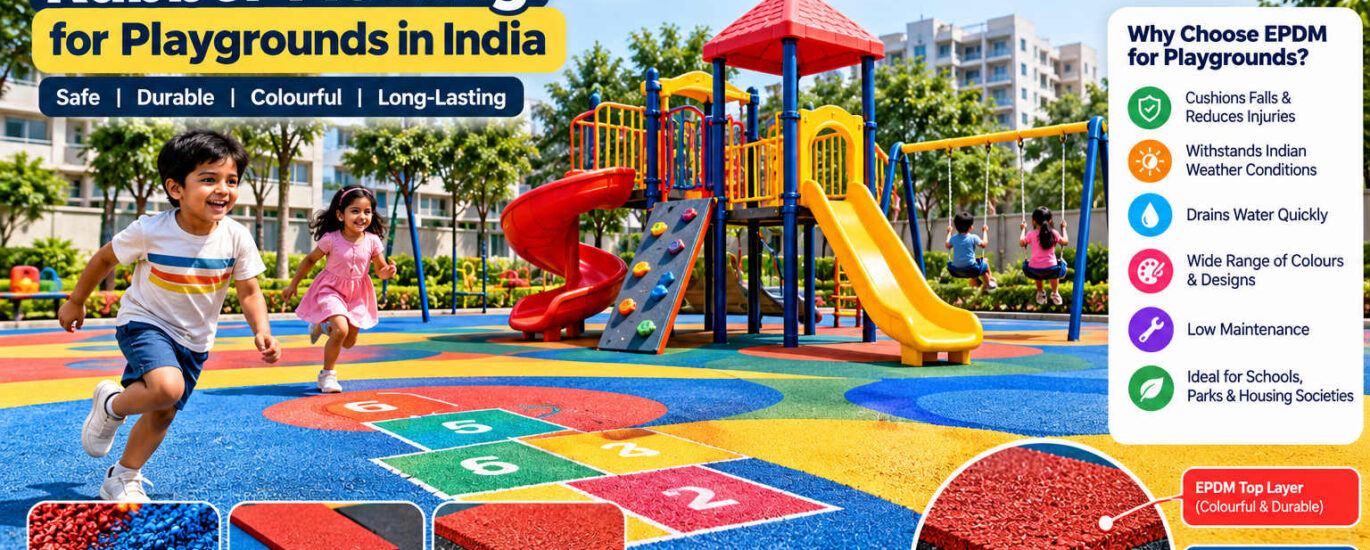
India’s playgrounds face strong sun, heavy monsoon rain and plenty of dust. Sand and loose gravel get kicked around, hide sharp objects and turn muddy. Plain concrete gets very hot in summer and is unforgiving in a fall. EPDM resists UV light far better than ordinary rubber, so colours last longer, and a properly laid surface allows water to drain instead of pooling. It also stays comfortable underfoot, which matters for barefoot children in preschool areas.
Thickness Decides Safety
The cushioning of the floor depends mainly on its thickness and the layers beneath it. A thin layer on hard concrete will not protect a child falling from a tall climber. The higher the equipment, the more cushioning you need. Do not accept a vague answer like “it’s safe.” Ask the supplier for the tested critical fall height of the exact flooring system they plan to install, and match it against the tallest platform in your play area. Taller structures like multi-play stations need thicker systems than toddler slides or low spring riders. For a preschool with only low equipment, a thinner layer may be enough, and you can save money by not over-specifying.
Base Preparation Is Where Projects Succeed or Fail
The surface you see is only half the system. EPDM needs a stable, level and well-drained base underneath, usually compacted stone or concrete, sometimes with a shock-absorbing rubber layer in between. If the base is uneven or holds water, the flooring will crack, lift or develop soft patches within a season or two. Ask who prepares the base and what it involves. A good installer will inspect the site, check drainage and level the ground before laying anything. Be cautious about quotes that skip this step, because that is often how a lower price is achieved.
Colours and Design
Playground EPDM comes in many colours, and mixing them lets you create patterns, pathways, hopscotch grids, number games or even themed shapes like a river or a sun. Bright colours help younger children find their way around, while softer tones suit gardens and residential complexes. Colour does not affect safety, but keep in mind that very dark shades can feel hotter in direct sun. If your play area has little shade, consider lighter colours or add shaded seating and canopies nearby.
What Affects the Cost
The final price depends on the area covered, the thickness required, the quality of the granules and binder, the amount of base work needed, the design complexity and the transport and labour at your location. Ask for a written quotation that separates material, base preparation and installation, and compare it on thickness and specifications, not just the total. A thin layer of low-quality rubber may look similar on the first day but can fade, harden or peel soon after. Cheap flooring in a playground is false economy, because repairs mean closing the area again.
Installation and Curing
Poured-in-place EPDM needs dry weather to cure properly. Rain during or just after installation can ruin the bond, so a good installer will plan the work around the weather and protect the area until it is ready. Tiles are less sensitive to this, but they still need a stable base and tight joints. Ask how long the area must stay closed after installation and what the plan is if bad weather interrupts the work.
Maintenance Is Simple but Not Optional
EPDM does not need much care, but it is not maintenance-free. Sweep it regularly, wash it with plain water and mild soap, and remove chewing gum or oil spills quickly. Check for lifting edges, cracks or worn patches and repair them early before they spread. Keep sharp tools and heavy vehicles off the surface. A small repair is cheap, while a large replacement is not.
Choosing a Supplier
Look for a company that visits the site, explains the system in plain language and shows projects it has already completed. Go Green Play Equipment supplies playground equipment and flooring for schools, parks and residential communities, and combining equipment and flooring from one supplier makes it easier to match fall heights to your structures. You can also look at the work of Telangana Corporate Services for projects across Hyderabad and Telangana when comparing options.