Most playgrounds in India are built for one kind of child: one who can climb steps, balance on a platform and grip a swing chain without help. For children who use wheelchairs, walk with support, process sound and touch differently, or need more time to feel comfortable, those playgrounds can feel like a locked door. If you’re planning inclusive playground equipment for special needs children in India, the aim is simple: let every child play, not just watch.
What “Inclusive” Actually Means
Inclusive play is often mistaken for a single ramp added at the end. In practice it means thinking about different needs from the start:
- Physical access: Can a child with a wheelchair or walker reach and use the equipment?
- Sensory comfort: Is the space calm, or overwhelming with noise, glare and sudden movement?
- Understanding: Are the activities clear to children who need simple, predictable play?
- Social play: Can children with different abilities play side by side?
An inclusive playground isn’t a separate corner. It’s one space where everyone belongs.
Features That Make a Real Difference
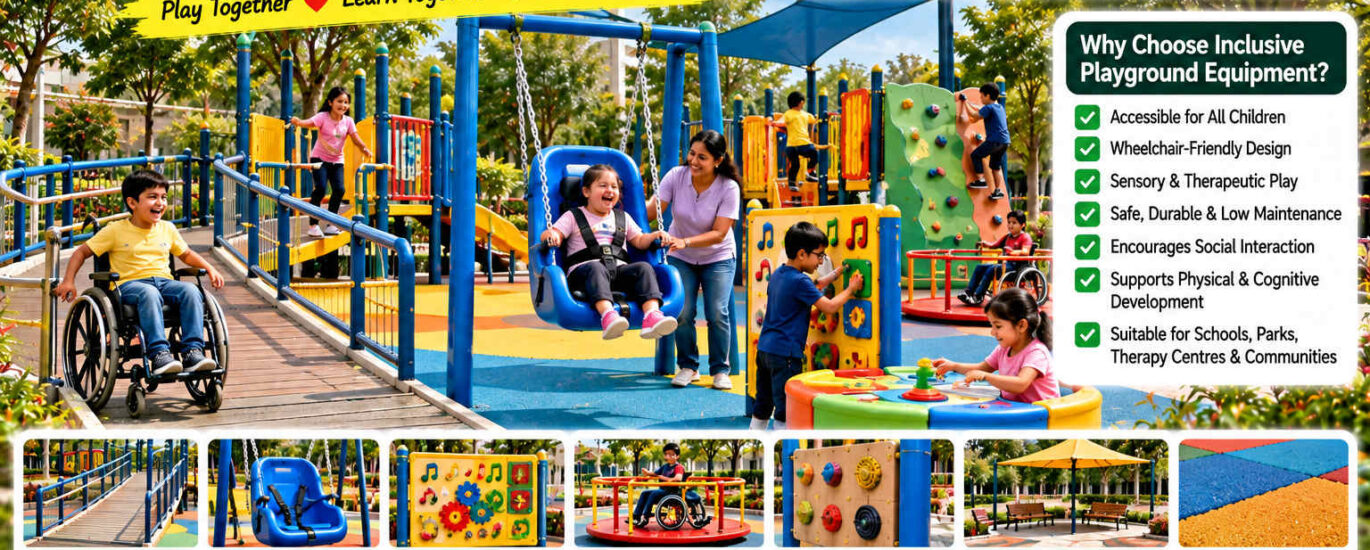
Ramps and wide paths. Gentle slopes and firm, even surfaces let wheelchairs and walkers move through the play area. Paths should be wide enough to turn comfortably.
Transfer points. Raised platforms at seat height let children move from a wheelchair onto equipment, with support rails nearby.
Supportive swings. Bucket seats with back and side support, or harness swings, help children who can’t sit upright unaided. Wheelchair-accessible swing platforms are also available.
Ground-level play. Spinners, sand tables, musical panels and sensory walls don’t need climbing, so more children can join in.
Sensory play. Textured panels, chimes, water features and tactile surfaces engage children who learn through touch and sound.
Quiet zones. A shaded, softer space where a child can step away from noise and crowds helps those who find busy play overwhelming.
Surfaces Matter Even More Here
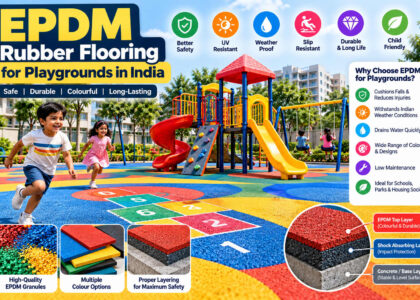
Loose sand or gravel makes it hard for wheelchairs and walkers to move. Firm, non-slip surfaces such as rubber tiles or poured rubber give both grip and cushioning, and they let a child move around independently. Check that edges between surfaces are flush, because a small lip can stop a wheelchair completely.
Safety Without Over-Protection
Children with special needs deserve the same chance to take small risks as anyone else. Good design keeps them safe without stopping them from playing:
- Rounded edges and no pinch points
- Handrails and back support where children need to steady themselves
- Clear sightlines so caregivers can watch from nearby
- Enclosed or fenced boundaries for children who may wander
- Soft, shock-absorbing surfaces beneath all equipment
Think About Caregivers Too
Parents, therapists and teachers spend long periods at the playground. Seating with shade, space for wheelchairs beside benches, and a nearby drinking water point make the space far more usable for everyone. Level access to toilets, where available, is a big help.
Planning It the Right Way
- Talk to families and therapists first. They know what children actually need, not what looks good on paper.
- Mix equipment types. Combine ground-level, sensory and accessible climbing features.
- Plan the layout as one space. Avoid isolating accessible equipment in a corner.
- Choose age-appropriate options. Children’s abilities vary widely within the same age.
- Start small if needed. A few well-chosen items often beat a crowded, poorly planned set.
Where Inclusive Playgrounds Are Needed
- Special schools and therapy centres that want daily outdoor play
- Mainstream schools with inclusive education programmes
- Public parks and municipal projects aiming to be accessible to all
- Housing societies with residents who have disabilities
- NGOs and care homes looking for therapeutic outdoor spaces
India’s Rights of Persons with Disabilities Act, 2016, encourages accessible public spaces, and many institutions now treat inclusive play as a basic expectation, not an extra.
Questions for a Supplier
- What accessible and sensory equipment do you offer?
- Have you completed inclusive playground projects before?
- What surfaces do you recommend for wheelchair access?
- Can the layout be customised to our children’s needs?
- What warranty and maintenance support do you provide?
- Can we speak to someone who has used your equipment in a similar setting?
Specific answers matter more than a brochure of accessible symbols.
Maintenance and Upkeep
Check surfaces for lifting edges, loose bolts and worn parts regularly. Keep paths free of debris, and make sure ramps and handrails stay secure. Small repairs matter more here, because a damaged surface can block access entirely.
Start With the Right Partner
Go Green Play Equipment offers outdoor playground products, and discussing your plan early helps match equipment to your children’s needs. If your project also includes outdoor fitness equipment for older residents or staff, Telangana Corporate Services can help with that side of the plan.
Final Thought
An inclusive playground isn’t about special treatment. It’s about removing barriers so every child can run, spin, climb or simply sit in the sun with friends. Plan with families, choose firm and safe surfaces, and mix equipment so everyone has something to enjoy. That’s what turns a playground into a community space.