Ask any parent in India about their local playground and you’ll hear the same complaint: “We can only go after 5 PM.” Metal slides become too hot to touch, rubber flooring bakes, and children get sunburnt or dehydrated within half an hour. If you’re thinking about playground shade sails and canopies in India, you’re not adding decoration. You’re deciding whether the playground can be used for most of the day or only for an hour at dusk.
Why Shade Matters More Here Than You Think
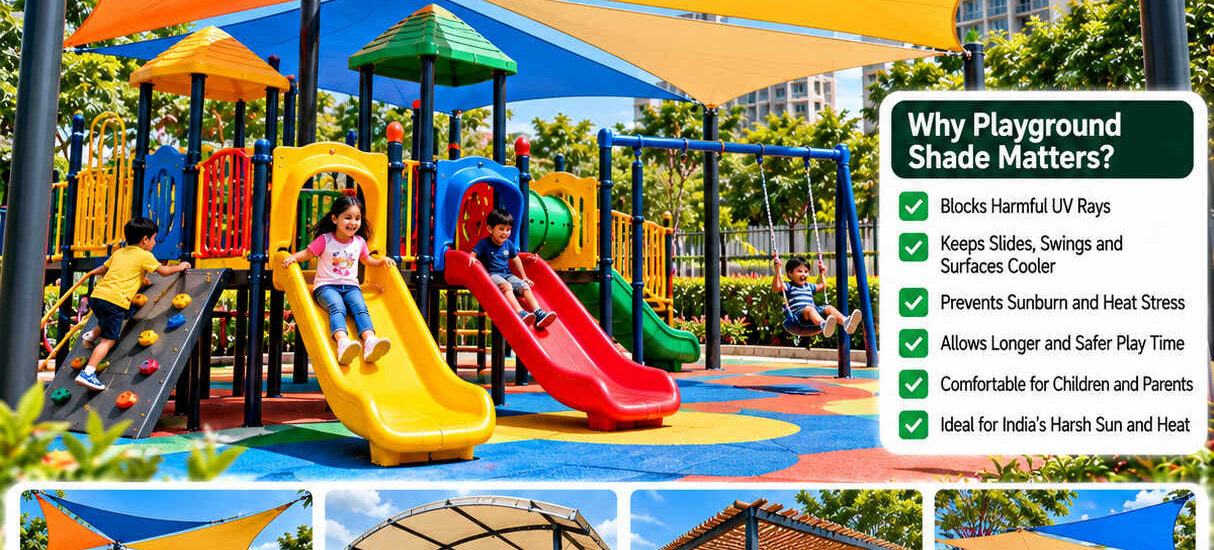
India’s sun is harsh for much of the year. A playground without cover causes real problems:
- Hot equipment. Slides, handrails and seats can become uncomfortable or unsafe to touch.
- Hot surfaces. Dark rubber and concrete radiate heat back at children’s feet and hands.
- Skin and eye exposure. Long hours in direct sun add up for kids who play outdoors daily.
- Shorter play time. Parents cut visits short, and equipment sits unused for most of the day.
- Less comfortable waiting. Adults supervising also need a place to sit out of the sun.
Shade stretches the useful hours of every piece of equipment you’ve paid for.
Shade Sails vs Canopies: What’s the Difference?
Shade sails are tensioned fabric sheets, usually triangular or rectangular, fixed to posts at an angle. They look modern, allow airflow and can be arranged in overlapping shapes.
Canopies and membrane structures are fixed roof-like structures with a frame underneath. They offer more coverage, handle wind differently and suit larger areas such as school courtyards and mall terraces.
Pergolas and fixed roofs give permanent shade, often with a metal or timber frame and sheeting.
Each works in different settings. Sails suit gardens, parks and society play areas. Canopies suit schools, clubs and commercial zones.
What to Look For in the Fabric
- UV protection. Ask for test data showing how much UV the fabric blocks, not just a vague claim.
- Breathable weave. Good shade fabric lets hot air escape instead of trapping it.
- Colour fastness. Cheap fabric fades and becomes brittle in a season.
- Water behaviour. Some fabrics let rain through, while waterproof ones need proper slope and drainage so water doesn’t pool.
- Fire resistance. Particularly relevant for malls, schools and enclosed spaces.
- Warranty. Reputable suppliers back fabric against fading and tearing.
Structure and Fixings Matter as Much as the Fabric
A shade sail is only as strong as its posts. Poorly anchored posts are the main reason sails fail.
- Thick steel posts with proper protective coating against rust
- Deep concrete footings sized to the structure
- Stainless steel fittings, such as turnbuckles, shackles and brackets
- Correct tension, since slack fabric flaps, wears faster and collects water
- Sloped design, so rain runs off instead of sitting in the middle
Ask who calculates wind load, especially in coastal areas and open grounds where strong gusts are common.
Positioning for Real Sun Conditions
Where the shade falls matters more than how big the canopy is.
- Observe the site at different times of day before deciding.
- Prioritise shade over the most-used and hottest equipment, such as slides and swings.
- Remember that the sun’s angle changes through the year, so overlapping sails often work better than one big cover.
- Leave open sides for airflow, so the space doesn’t turn into a heat trap.
- Keep supervision seating shaded as well.
Safety Details Often Missed
- Posts should be placed outside the equipment’s safe fall zone, never inside it.
- Wrap or pad exposed post bases and edges.
- Keep sail edges at a safe height so children can’t reach or pull on them.
- Check clearance above tall slides and climbing frames.
- Avoid placing structures near overhead electrical lines.
Pairing Shade With Flooring and Equipment
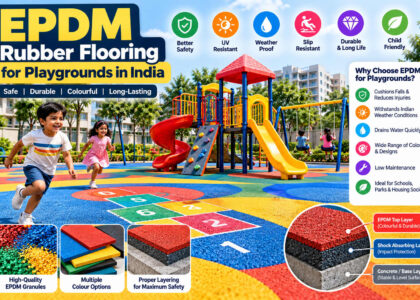
Shade works best as part of a full plan. Light-coloured flooring in shaded areas stays cooler. Equipment made of materials that heat up quickly, such as bare metal, benefits most from cover. If you’re replacing or adding surfaces at the same time, plan everything together so posts don’t conflict with flooring or equipment footings.
Questions to Ask a Supplier
- What fabric do you use, and what UV protection data can you share?
- How are posts and footings designed for wind?
- What warranty covers fabric and structure?
- Who handles installation and site assessment?
- Can I see an installation that’s a few years old?
- What maintenance is needed through monsoon and summer?
Clear answers suggest real experience. Vague ones deserve caution.
Maintenance Keeps It Looking Good
Wash the fabric with mild soap and water a few times a year, check bolts and fittings, and look for fraying or sagging. Tighten tension if it loosens, and remove debris that collects on top. Before cyclone or heavy storm warnings, some owners take down sails temporarily, so ask your supplier for advice on your site.
Choosing the Right Partner
Go Green Play Equipment offers outdoor playground products, and discussing shade at the planning stage means it fits properly with your equipment layout. If your project also includes an outdoor fitness zone, Telangana Corporate Services can help with that side, since shade benefits gym users just as much.
Final Thought
Shade turns a playground that’s busy for one hour into one that’s usable most of the day. Choose good fabric, strong posts and a layout that follows the sun, and the investment pays back in comfort, safety and use. Children will play longer, and parents will be happier to stay.