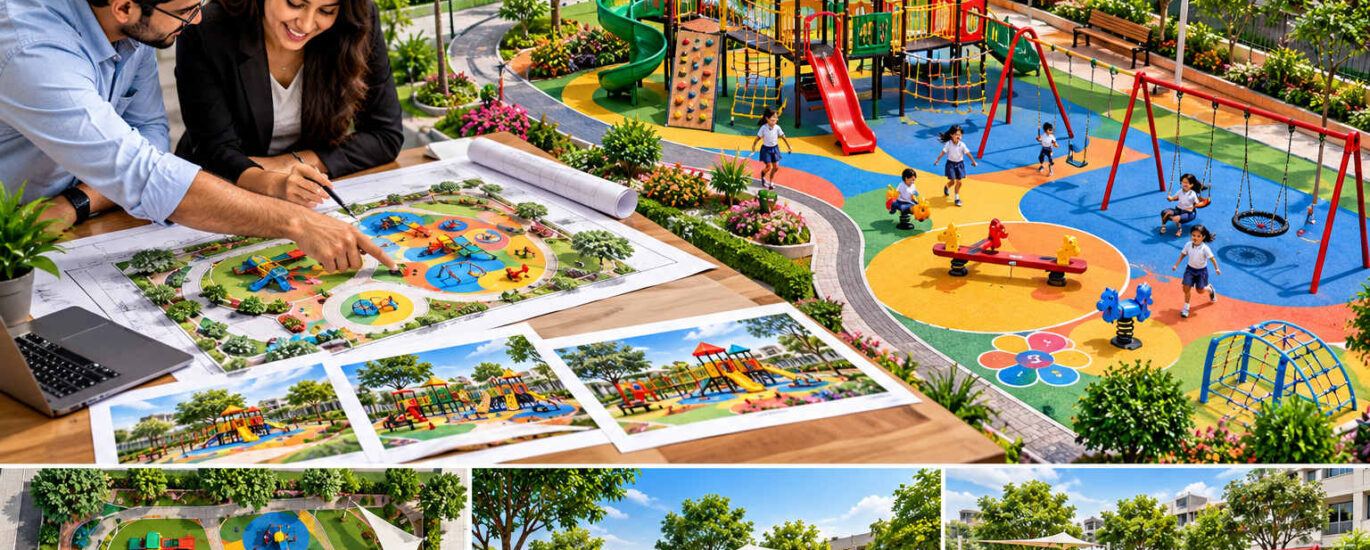
Most people buy playground equipment the way they buy furniture: scroll through a catalogue, pick what looks nice and hope it fits. Then the slide blocks the path, the swings sit too close to the wall and half the space is wasted. A good design service avoids that by starting with your site and your children, not with the product list. If you’re considering custom playground design and layout services in India, here’s what the process should look like and what to expect from the people doing it.
Why Layout Matters as Much as Equipment
The same equipment can feel brilliant or awkward depending on how it’s arranged.
- Safe spacing keeps children from colliding or falling into something hard
- Good flow lets kids move from one activity to the next without queues
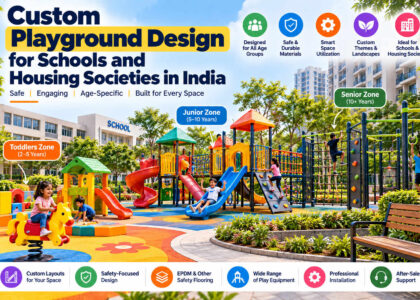
- Smart zoning separates toddlers from older children
- Shade and drainage decide whether the space is usable all day
- Visibility lets parents and staff supervise without standing in one spot
A thoughtful layout makes a modest set of equipment feel generous. A poor one makes expensive equipment feel cramped.
What “Custom” Really Means
Custom doesn’t have to mean fancy. It means the design responds to your actual situation:
- Your site’s shape, slope and obstacles
- The ages and number of children
- Your budget and timeline
- Your climate and ground conditions
- Your theme, brand or school culture
- Future expansion plans
It might be a few standard pieces arranged well, or fully tailored structures for a unique space. Either way, the thinking is specific to you.
The Typical Design Process
- Briefing. The designer asks who will use the space, how many children, what ages, what budget and what you want to achieve.
- Site visit or survey. Measurements, photos, notes on trees, drains, slopes, walls, existing surfaces and where the sun falls.
- Concept options. Usually one to three rough layouts showing zones, equipment types and circulation.
- Refinement. You give feedback and the designer adjusts positions, equipment and flow.
- Detailed layout and specifications. Final drawing with dimensions, safety zones, surfacing and material details.
- Quotation and phasing. A clear price breakdown, with options to build in stages if the budget is tight.
- Installation planning. Timeline, site preparation, delivery and handover.
If a supplier jumps straight from enquiry to quote without any of this, you’re not getting a design service. You’re getting a price list.
What You Should Receive
- A scaled layout plan showing where each piece will stand
- Safety zones and clearances marked around equipment
- A zoning plan separating age groups and activity types
- Surfacing recommendations for each area
- A 3D render or visual impression, if offered, to help you imagine the result
- A list of equipment with materials, sizes and age ranges
- A phased plan if you can’t build everything at once
- A clear price breakdown covering equipment, flooring, installation and extras
Ask to see samples of past plans. A designer with experience will have them.
Design Choices That Make a Difference
Zones for different ages. Toddlers, young children and older kids need different equipment and different spacing. Separate areas reduce accidents and arguments.
Activity variety. Mix climbing, swinging, sliding, balancing and imaginative play, so more children find something they enjoy.
Natural circulation. Children shouldn’t have to run through a swing zone to reach the slide. Plan paths so movement is smooth.
Shade and seating. Trees, canopies and benches make the space comfortable for children and the adults who watch them.
Accessibility. Ramps, firm surfaces and wheelchair-friendly features invite more children to play, including those with different abilities.
Themes. A garden, jungle, space or village theme can make the area feel unique, and also helps with branding for schools, resorts and cafes.
Room to grow. Leave space and connections for adding equipment later.
Where Custom Design Pays Off Most
- Irregular or small sites, where careful planning gets more out of limited space
- Schools and preschools, with clear age zoning and supervision needs
- Housing societies and townships, where several play areas need to feel consistent
- Resorts, cafes and malls, where look and feel matter to guests
- Parks and public spaces, where thousands of children may use the same area
- Special needs and inclusive play areas, which need thoughtful planning from the start
Questions to Ask a Design Provider
- Do you visit the site, or work only from photos?
- How many concept options do I get, and how many revisions are included?
- Will I receive a scaled plan with safety zones?
- Can I see examples of similar projects you’ve designed?
- Do you design to a recognised safety standard, and which one?
- Can the plan be built in phases?
- Is the design fee separate, or included if I order equipment?
- Who handles installation, and is the designer involved?
Clear answers tell you far more than a glossy brochure.
Red Flags
- No site visit or measurements
- One generic layout offered to everyone
- No mention of surfacing or safety zones
- Pressure to buy large sets that won’t fit
- No written plan before quoting
- Unwillingness to explain material or design choices
Budget and Phasing
A good designer works with your budget, not against it. If you can’t afford everything now, plan a first phase that works on its own, such as a small climbing zone and swings, then add more in later years. Phasing avoids paying for a half-finished, awkward playground.
Choosing a Partner
Go Green Play Equipment offers outdoor playground products, and sharing your site details, ages and budget at the start helps shape a layout that fits. If your project also includes an outdoor fitness corner, Telangana Corporate Services can help with that side.
Final Thought
A well-designed playground feels easy: children know where to go, parents know where to sit and nothing seems squeezed. That ease comes from planning. Choose a provider who visits your site, listens to your needs and shows you a clear plan before anything is built. The result will serve children far better than a set picked from a catalogue.