When a child gets hurt on a playground, the cause is rarely bad luck. It’s usually a gap that trapped a finger, a surface too hard for the height, a bolt left loose or a structure built too lightly. That is why playground equipment safety standards in India matter to every school, society, park authority and resort that buys play equipment. Knowing what the standards cover helps you ask better questions and spot suppliers who only talk about safety.
Why Standards Exist
Standards turn “safe enough” into something measurable. They set common expectations for how equipment is designed, built, installed and maintained, so that a buyer doesn’t have to rely on a salesperson’s word alone.
For buyers, a standard gives you:
- A checklist of what to ask a supplier
- A reference if there’s ever a dispute or an incident
- A way to compare quotes on the same basis
- Stronger documentation for tenders and institutional purchases
Indian Standards You Will Come Across
India’s Bureau of Indian Standards (BIS) has published several standards that touch on playground equipment:
- IS 6869 is a multi-part series covering playground equipment for parks, beginning with general requirements. Later parts deal with specific items, and Part 6 covers swings. bisbis
- IS 8404 covers fixed playground equipment for schools, with Part 1 setting out general requirements. bis
- IS 17923:2022 is a BIS guideline on safety in educational institutions and community sports academies, covering aspects such as laying out the playground, safe access to platforms and maintenance programmes. bis
Several of these documents date back decades, so ask your supplier which versions they follow and check the current status on the BIS portal. Rules and certification requirements can differ by project type, especially for government or institutional purchases, so confirm what applies to yours.
International Standards Suppliers Often Mention
Many manufacturers also refer to international standards. The most common are the European EN 1176 series for playground equipment and EN 1177 for impact-absorbing surfacing, along with ASTM standards in the United States. Having a supplier who designs to a recognised standard, Indian or international, is a good sign. What matters is that they can show you which one and how their products meet it.
What Safety Standards Typically Cover
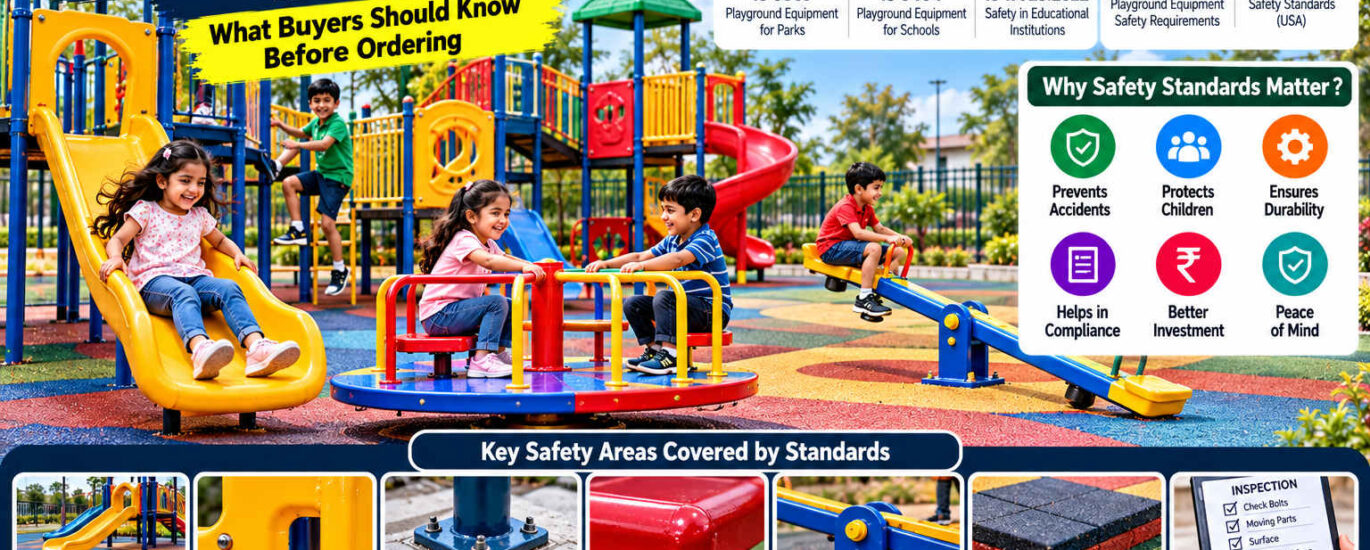
Without going into exact figures, most playground standards deal with the same set of risks:
- Fall protection. Equipment height, fall zones and impact-absorbing surfaces beneath.
- Entrapment. Gaps, openings and angles where a head, neck or finger could get stuck.
- Structural strength. Materials, welds and joints that must handle repeated use and heavy loads.
- Edges and projections. Rounded corners, protected bolt ends and no sharp points.
- Moving parts. Swings, spinners and see-saws where pinching and impact are real risks.
- Stability and anchoring. Footings that stop equipment tipping or shifting.
- Materials. Non-toxic finishes and weather-resistant components.
- Installation and inspection. Correct assembly, final checks and regular maintenance.
- Age suitability. Equipment matched to the right age group.
Questions to Ask a Supplier
- Which Indian or international standards does your equipment follow?
- Can you share documents, test reports or certificates?
- How do you handle fall zones and surfacing recommendations?
- How do you prevent entrapment and pinch points in your designs?
- What materials and coatings do you use, and are they non-toxic?
- Who installs the equipment, and is there a final safety check?
- What does the warranty cover, and what maintenance do you recommend?
- Can I visit a site where your equipment has been in use for a few years?
A supplier who answers clearly and shows paperwork is usually more reliable than one who only repeats “fully safe.”
Beyond the Equipment: Surfaces and Layout
Standards cover more than the structure itself.
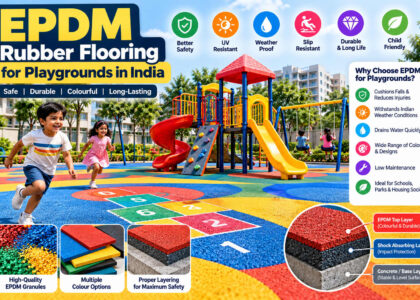
- Surfacing: Hard ground under equipment is a leading cause of injuries. Rubber tiles, poured rubber, sand or other impact-absorbing surfaces matter.
- Spacing: Enough room between structures so children don’t collide.
- Zoning: Separate areas for toddlers and older children.
- Sightlines: Staff and parents should be able to see every part of the play area.
- Fencing and boundaries: Keep children away from roads, water and parking.
- Shade and drainage: Hot metal and standing water create their own hazards.
Inspection and Maintenance Are Part of Safety
Even equipment that meets every standard on delivery day can become unsafe if nobody looks after it.
- Daily: Quick visual check for damage, litter and loose parts.
- Weekly: Test moving parts, check for wobble and inspect surfaces.
- Monthly: Tighten bolts, lubricate joints, look for rust, cracks or splinters.
- Yearly: Detailed inspection, ideally by a trained technician.
Keep a simple written log. It helps spot repeat problems and shows due care if anyone raises a concern.
Warning Signs of a Weak Supplier
- Vague answers about standards or materials
- No documentation, only brochures
- Very low prices with no explanation
- Reluctance to let you visit past projects
- No installation support or warranty
- Equipment with visible sharp edges, loose fittings or rough welds
For Schools, Societies and Public Buyers
Institutional buyers should ask for written specifications that name the standards required and compare each quote against them. Make sure tender documents match what the supplier actually offers, since small mismatches can cause rejection or later disputes. Train staff or caretakers to carry out basic checks, and keep records.
Choosing a Partner
Go Green Play Equipment offers outdoor playground products, and asking about standards, materials and installation at the planning stage helps you compare it properly with other suppliers. If your project also includes outdoor fitness equipment, Telangana Corporate Services can help with that side.
Final Thought
Safety standards aren’t paperwork for its own sake. They’re a shared language between buyers and manufacturers about what keeps children from getting hurt. Ask which standards a supplier follows, look for evidence, plan safe surfaces and layouts, and keep up regular inspections. A playground that is checked often is far more likely to stay safe.