Inflatables sell themselves. A bright bouncy castle at a mall, a giant slide at a fair, an obstacle course at a school carnival: children head straight for them. But a lot of inflatable equipment is made badly, and a badly made one can fail in ways that hurt people. If you’re searching for an inflatable amusement park equipment manufacturer in India, the real work is finding someone who builds for safety first and looks second.
What Counts as Inflatable Amusement Equipment
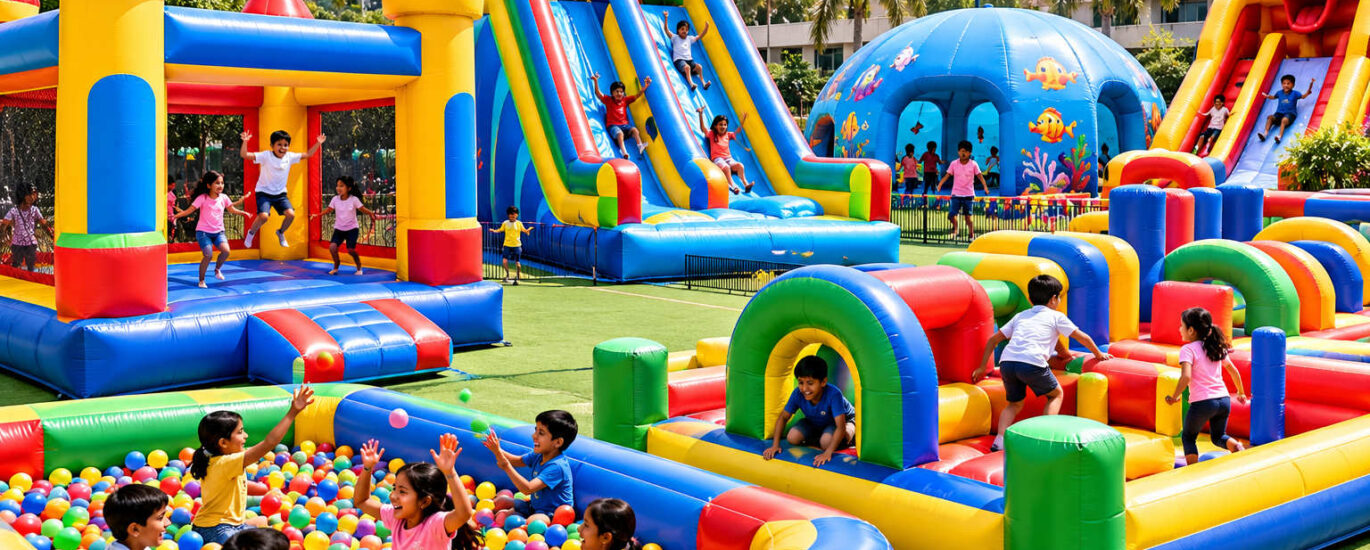
The range is wide. Bouncy castles are the classic. Then there are inflatable slides, obstacle courses, jumping arenas, ball pits, soft-play zones, water slides, inflatable domes and arches, and themed mascot-style pieces for events. Some are meant for a weekend rental, others for permanent use in amusement parks, resorts or malls.
The difference matters. A unit used every day for months needs heavier fabric, stronger seams and more careful handling than something taken out for the occasional birthday party.
Fabric and Stitching Come First
Most inflatables are made from PVC-coated fabric. Thin or cheap material wears at the corners, around the entrance and at the base where children land the hardest. Ask how thick the fabric is and what it’s coated with. Heavier material costs more, and it’s usually worth it.
Stitching is the next thing to check. Seams take the strain every time a child jumps. Look at how they’re sewn and how many rows of stitching are used at stress points. Poor stitching splits, and a split seam on an inflated structure can deflate quickly.
The colours and prints should be UV-resistant. In Indian sun, cheap coatings fade and go sticky.
The Blower Is Not an Accessory
An inflatable stays up because a blower keeps pushing air in. If the blower fails or is underpowered, the structure sags. Ask what kind of blower comes with each unit and how much power it uses. Check that the blower is properly matched to the size of the inflatable, because a large castle with a weak blower never stays firm.
Electrical safety is part of this too. Cables should be properly covered, protected from water and kept out of the way of children. For anything outdoors, speak to an electrician about earthing and protection devices. This is not the place for loose wires and borrowed extension cords.
Anchoring and Wind
Inflatables catch wind like sails. Many serious accidents with bouncy structures happen because the unit wasn’t anchored properly or was used in a strong gust. Good manufacturers provide anchor points and clear instructions on how to secure the unit, using stakes on soft ground or heavy weights on hard surfaces. They should also tell you at what wind speed to stop use and deflate. If a supplier doesn’t talk about wind at all, be careful.
Design Details That Make a Difference
Look for a safe entry area with a ramp or step so children don’t jump straight onto the main bed. Check the side walls and netting. They should be high enough and the netting fine enough that small hands and feet can’t get caught. Make sure there’s a soft landing at the exit of any slide. Rounded corners and smooth inside surfaces are better than hard seams where children land.
Age matters too. A toddler unit and a unit for teenagers shouldn’t be mixed in the same space. Ask what ages and how many children each product is designed for, and don’t go over that number.
Standards and Test Reports
There’s no point trusting a brochure. Ask for test reports or documentation showing how the product was checked. International references like the European standard EN 14960 for inflatable play equipment are commonly used as a benchmark, and a manufacturer who builds to a recognised standard should be able to explain how. Also check with local authorities about any permits needed for commercial use or public events, because requirements vary by place.
Buying vs Renting
If you run an event business or an amusement venue, buying makes sense when you’ll use units often. If you only need something for a few days a year, renting is cheaper and less hassle. When you buy, think about storage. Inflatables must be cleaned, fully dried and folded properly. Damp storage leads to mould and a bad smell, and damaged fabric weakens faster.
What Running One Safely Looks Like
An inflatable is not something you set up and walk away from. You need a trained person watching at all times, a limit on how many children go on at once, rules about shoes and sharp objects, and a plan for what to do if it starts to deflate. Staff should know how to move children off calmly and quickly. Check the unit before every use for tears, loose seams and damaged anchor points. Check the blower and the cables too.
Think about shade, because the dark vinyl surface gets hot in direct sun.
Questions Worth Asking a Manufacturer
Ask what fabric and stitching are used and where the stress points are reinforced. Ask what blower comes with the unit and how it’s powered. Ask how the structure should be anchored and what the wind limits are. Ask about age ranges and capacity. Ask whether the product has been tested to a recognised standard and whether reports are available. Ask what repair and spare part services are available. Ask to see a unit in use somewhere. A manufacturer who does this properly will be happy to answer.
Planning the Wider Space
Inflatables are often one part of a bigger fun zone. For fixed outdoor playground equipment to sit beside them, Go Green Play Equipment offers outdoor playground products. If you’re also planning benches, open gym equipment or other outdoor furniture for the venue, Telangana Corporate Services can help with supply and installation.
A good inflatable is fun, and a good manufacturer makes sure the fun doesn’t come at a cost. Check the fabric, the seams, the blower and the anchoring, ask for proof of testing and run the unit with trained staff. Do that and the thing in the middle of the venue will keep drawing children for years.