
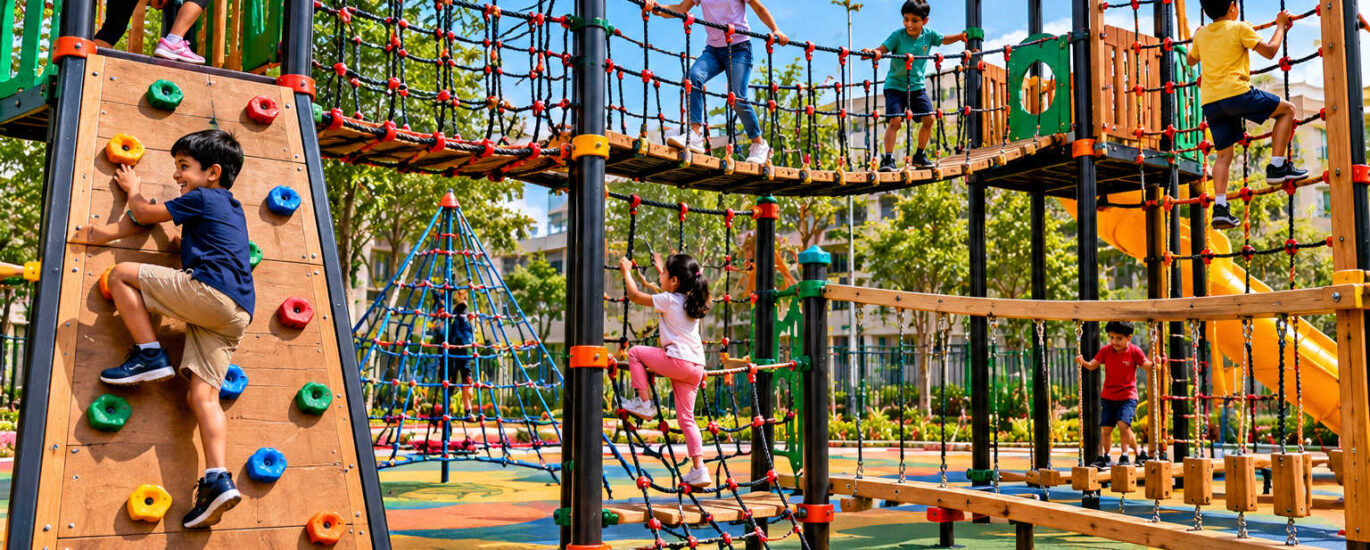
Watch any group of children in a park. Within minutes, someone is trying to climb something. A fence, a wall, the back of a bench. Climbing frames and rope courses give that urge a safe outlet. If you’re looking at climbing frames and rope courses for kids in India, the goal is to pick equipment that challenges children without putting them in danger.
Why Kids Love Climbing (And Why It’s Good for Them)
Climbing isn’t just fun. It works the whole body.
- Strength. Arms, legs and core all get used.
- Coordination and balance. Children learn where their hands and feet are.
- Problem-solving. Which way up? Which hold next?
- Confidence. Reaching the top feels like a real achievement.
- Social play. Kids cheer, help and take turns.
It’s one of the few activities where children test their limits on their own terms.
Common Types of Climbing Equipment
- Climbing frames and towers: Metal or timber structures with ladders, platforms and bridges
- Net climbers and scramble nets: Rope nets stretched across a frame
- Rope pyramids and spider webs: Tall rope structures, often a park centrepiece
- Climbing walls: Panels with colourful holds, built at different heights
- Rope bridges and balance trails: Low crossings that build balance
- Low ropes courses: A set of linked challenges close to the ground
- Multi-play units: Climbers combined with slides, swings and tunnels
Pick based on the age and ability of the children who’ll use it, not on what looks most impressive.
Match Equipment to Age
- Toddlers (under 5): Very low platforms, short ramps and soft climbers. Skip tall nets and ropes.
- Ages 5 to 8: Medium-height frames, small climbing walls and simple net climbers.
- Ages 9 to 12: Taller structures, rope pyramids and challenging walls.
- Teens: Adventure-style courses and larger ropes structures, usually in supervised settings.
Mixing all ages in one climbing area leads to collisions and falls. Keep zones separate where you can.
Safety Points Specific to Climbing and Ropes
Climbing means height, so safety needs extra care.
- Impact-absorbing surface underneath. Rubber tiles, poured rubber or thick sand. Never bare concrete, tiles or hard soil.
- Enough clear space around the structure so a falling child doesn’t hit something else.
- Ropes fixed at both ends. Loose ropes with free ends can tangle or wrap around a child’s neck.
- No gaps that trap a head, hand or foot, especially in nets and between platforms.
- Rounded edges and covered bolts.
- Strong, sealed rope connections that won’t loosen under repeated pulling.
- Sensible heights matched to the age group.
- Clear signs showing age range and supervision rules.
Remind parents that children shouldn’t climb with scarves, loose cords or drawstrings around the neck.
Materials That Last in Indian Conditions
Sun, heat and monsoon rain wear down climbing equipment quickly.
- Ropes: Look for UV-resistant, weatherproof rope with a strong core. Cheap rope fades, frays and weakens in the sun.
- Frames: Galvanised or well-coated steel resists rust. Treated timber looks natural but needs regular care.
- Holds and panels: UV-stable plastic or FRP that won’t crack or fade.
- Connectors and fasteners: Rust-resistant fittings, not plain steel.
- Footings: Concrete bases that keep structures stable.
Ask directly what each material is made of and how it handles heavy sun and rain.
Layout and Placement
- Keep climbing equipment away from swings and busy walkways.
- Leave generous space around tall structures for safe falls and queuing.
- Provide shade. Metal and rope get uncomfortably hot at midday.
- Make sure the area drains well so ropes, holds and surfaces dry quickly.
- Place it where adults can see it from seating or entry points.
- Add a nearby bench or waiting area for parents and queuing children.
Where These Fit Best
- Schools and preschools: Age-appropriate frames and low ropes courses
- Housing societies: Compact climbers that fit shared play areas
- Public parks: Large rope pyramids and net structures
- Resorts and cafes: Photogenic climbers that match the property’s style
- Adventure parks and activity centres: Larger, supervised ropes courses
For high or complex courses, such as rope bridges and adventure trails, supervision and trained staff matter.
Maintenance You Can’t Skip
Climbing equipment takes a lot of pulling and weight, so wear shows quickly.
- Daily: Look for loose, frayed or missing parts, and clear debris.
- Weekly: Check rope tension, knots and net connections.
- Monthly: Tighten bolts, inspect welds and check footings.
- Seasonally: Look for UV damage, rust and rot, and re-treat where needed.
- Yearly: A full inspection by a qualified person.
Replace frayed ropes and damaged parts immediately. Don’t leave a damaged climbing structure open.
Questions for a Supplier
- What age ranges is each structure designed for?
- What rope type, core and UV treatment do you use?
- How are ropes and nets fixed to the frame?
- What flooring and clear space do you recommend?
- What warranty covers ropes, frames and fittings?
- Who installs, and how are footings made?
- Can I visit an installation that has been outdoors for a few years?
Specific answers show real experience.
Cost and Value
Cheap ropes and thin frames save money at the start and cost more later. Compare cost over years of use, and ask about replacement ropes and spare parts. A well-made climbing frame can stay popular for a long time with simple upkeep.
Choosing a Supplier
Go Green Play Equipment offers outdoor playground products, and sharing your space, age group and budget helps match the right climbing structure. If your site also has an outdoor fitness area, Telangana Corporate Services can help with that side.
Final Thought
Climbing frames and rope courses give children something they naturally crave: a challenge they can master. Choose structures that suit their age, build on a soft surface, use weather-proof materials and inspect regularly. Done well, they become the part of the playground children rush to first.