
A new playground looks great for a few months. Then a swing chain starts to squeak, a slide develops a crack at the edge and the rubber tiles lift at the corners. Nobody notices until a child gets hurt or a parent complains. These playground equipment maintenance tips for India are meant for the people who actually look after the place: school staff, society managers, park caretakers and resort teams.
Why Playgrounds Wear Out Faster Here
Indian conditions are hard on outdoor equipment.
- Strong sun fades paint and makes plastic brittle
- Monsoon rain speeds up rust and rot
- Dust and sand clog moving parts
- Heavy use during holidays, weekends and festival crowds
- Misuse, such as kids standing on swing seats or climbing the wrong way up a slide
Regular checks cost far less than replacing equipment or dealing with an injury.
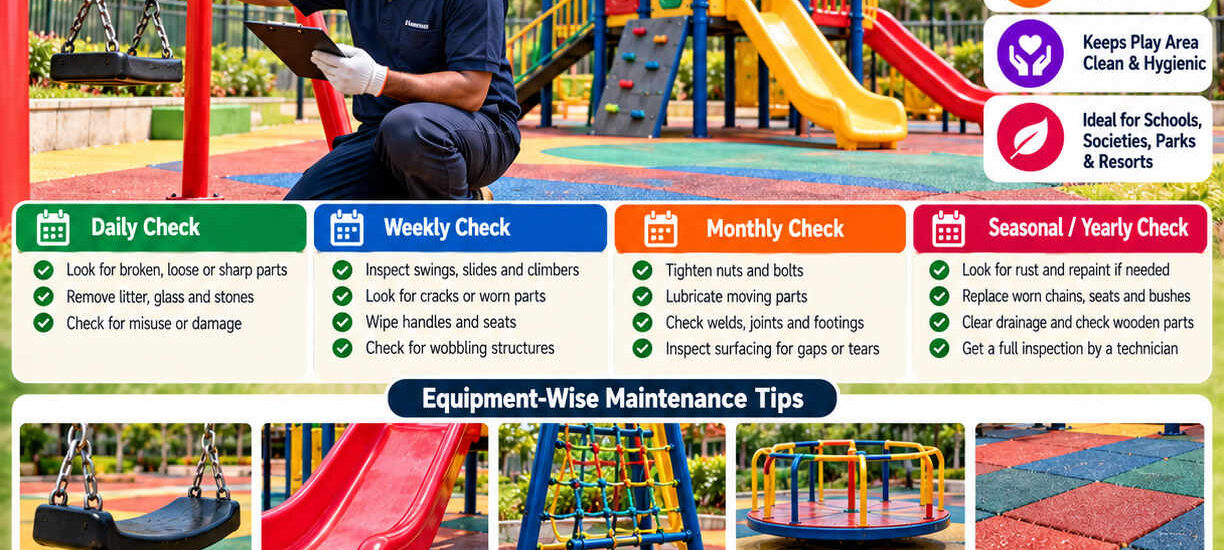
A Simple Routine You Can Actually Follow
Every day (two minutes):
- Walk around and look for anything broken, bent or loose
- Pick up glass, stones, litter and sharp objects
- Check that no one has tied ropes or hung things on the equipment
Every week:
- Push and pull each structure to test for wobble
- Check swing seats, chains and hangers
- Look at slide surfaces and edges for cracks
- Wipe down handles and seats
Every month:
- Tighten nuts and bolts
- Lubricate moving joints, bearings and hinges
- Inspect welds and joints for hairline cracks
- Check footings for exposed concrete or shifting posts
- Look at surfacing for tears, gaps or lifting edges
Every season or year:
- Check for rust, repaint chipped areas and treat early corrosion
- Replace worn chains, seats and bushes before they fail
- Have a trained technician do a full inspection
Write each check in a simple log: date, who checked, what was found and what was fixed.
Equipment-by-Equipment Checklist
Swings
- Chains should be free of rust, kinks and worn links
- Seats should have no cracks, sharp edges or loose fittings
- Hangers and bearings should move smoothly without grinding
- Chain covers should be in place to protect fingers
Slides
- Surface should be smooth, with no cracks or raised edges
- Side walls should be firm and undamaged
- Exit area should have enough clear space and no puddles
- Metal slides should be checked for heat on hot days
Climbers and ladders
- Rungs should be tight and free of rust or splinters
- Handholds should be secure
- Steps should not be slippery
Merry-go-rounds and see-saws
- Bearings should turn freely without wobble
- Pivots and stoppers should be intact
- Handles should be firm and rounded
Plastic and FRP parts
- Look for fading, hairline cracks and rough patches
- Replace brittle or damaged parts rather than patching
Wooden parts
- Check for splinters, rot and termite signs
- Re-seal or re-stain as needed
- Keep soil and plants away from wooden posts
Don’t Forget the Ground
The surface under the equipment is part of its safety.
- Rubber tiles: Look for lifting corners, gaps and tears. Replace damaged tiles quickly.
- Sand or loose fill: Rake it, remove debris and top it up where it has thinned out.
- Drainage: Clear drains so water doesn’t collect under equipment.
- Edges: Fix any tripping hazards where surfaces meet.
A worn surface can make a minor fall serious.
Monsoon and Summer Tweaks
Before monsoon: Tighten bolts, repaint chipped areas, clear drainage and check wooden parts for rot.
After monsoon: Look for rust, lubricate moving parts and check for soil washing away from footings.
In summer: Test metal slides and handrails, and put up shade where possible. Watch for faded or brittle plastic.
Hygiene Matters Too
Children touch everything. Wipe handles and seats regularly with mild soap and water. Clear bird droppings, remove garbage and keep the area free of stray animals’ mess. For sand pits, rake daily and cover when not in use. For indoor soft-play areas, follow a stricter cleaning schedule.
When to Take Something Out of Use
Put up a clear sign and block access if you see:
- A crack near a weld or joint
- A wobbling or leaning structure
- A broken or missing part
- Sharp edges or exposed bolts
- Heavy rust on structural parts
- A swing chain with damaged links
Don’t wait for a convenient time. A closed slide is far better than an injured child.
Repair or Replace?
Small problems, like loose bolts, worn chain covers and minor paint chips, are easy to fix. But structural cracks, severely rusted frames or repeated bearing failures usually mean replacement is the safer and cheaper choice. Your supplier can advise on which parts are worth repairing.
Who Should Do What
- Daily checks: A caretaker, security guard or teacher
- Monthly checks: The facility or maintenance team
- Yearly inspection: The supplier or a qualified technician
- Parents and users: Give them a number to report problems
A simple notice near the entrance with a contact number turns every parent into an extra pair of eyes.
Common Mistakes
- Waiting for something to break before checking it
- Painting over rust without cleaning it first
- Ignoring the surfacing and drainage
- Skipping records, so no one knows what was last fixed
- Using the wrong lubricant or too much of it
- Leaving damaged equipment open because “it’s only a small crack”
Think About Spare Parts and Support
Ask your supplier early about spare parts like chains, seats, bushes and bolts, and how fast they can deliver. An annual maintenance contract can be useful for schools and societies without a dedicated technician.
Where to Get Help
Go Green Play Equipment offers outdoor playground products, and asking about care schedules and spare parts when you buy saves trouble later. If your site also has an outdoor gym, Telangana Corporate Services can advise on that equipment too.
Final Thought
A well-kept playground stays safe, attractive and busy for years, while a neglected one becomes a hazard within a couple of seasons. Check often, fix small problems early, keep a log and close anything unsafe straight away. A few minutes a week protects every child who plays there.